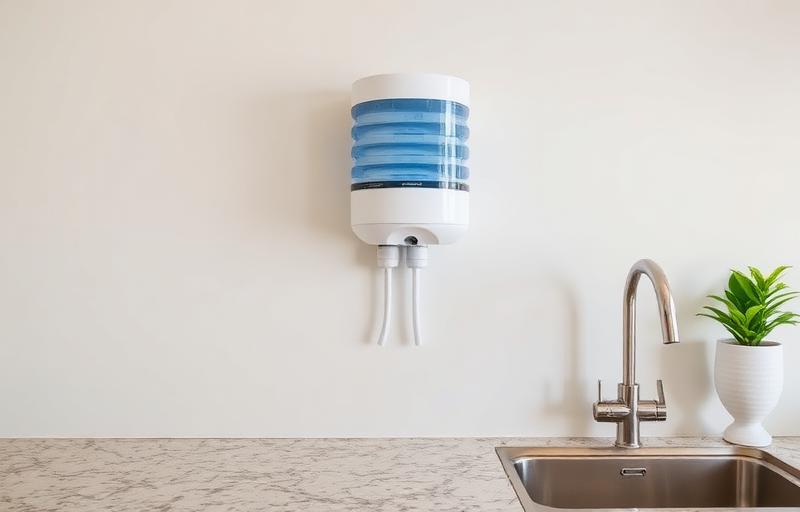
UV (ultraviolet) purification uses a special lamp that emits UV-C light at 254 nanometres. At this wavelength, light damages the DNA of bacteria, viruses and cysts so they can no longer multiply or cause illness.
The UV workflow, step by step
1. **Pre-filtration:** Sediment and carbon filters remove dust, rust and chlorine. Clear water matters — particles can shade germs from the light. 2. **Entry to the chamber:** Water flows into a steel or quartz chamber surrounding the UV lamp. 3. **Exposure:** As water passes the lamp, every drop gets a controlled UV dose in a few seconds. 4. **DNA disruption:** Microorganisms are inactivated — 99.99% of common bacteria and viruses. 5. **Exit to storage:** Disinfected water moves to the tank, often through a UV-in-tank LED that keeps stored water fresh.
What UV does not do
- It does **not** reduce TDS, salts or hardness.
- It does **not** remove heavy metals like lead, arsenic or fluoride.
- It does **not** remove dead germs — that's why UF membranes are often added afterwards.
Why RO + UV is the best combination
RO removes dissolved salts and chemicals; UV guarantees microbiological safety, including any water blended through the TDS controller. Together they cover both chemical and biological risk.
Keeping UV effective
UV lamps lose strength over time and should be replaced about every 12 months, even if they still glow. The quartz sleeve must be cleaned so light passes through fully.
Bottom line
With an iDrink rental, UV lamp checks and replacements are included in your monthly rent — so your water stays germ-free without surprise costs.